Whether you work as a solo financial advisor or as part of a larger team, it is easy to get pulled into the day-to-day and lose sight of your longer-term marketing strategy.
And when your days are already full of client meetings, annual reviews, and planning work, sitting down to map out a marketing plan rarely makes the calendar. So we did some of that thinking for you.
Below are ten marketing goals for financial advisors who want to reach the right people, deepen client relationships, and grow their practice at a pace they can sustain. Each one comes with why it matters, an action step, and a takeaway you can put to work this quarter.
Every goal here comes out of our work with advisory firms, and we have watched them hold up inside firms with real compliance constraints. For a wider view of the landscape, our complete guide to digital marketing for financial advisors covers the compliance side in more depth.
Here they are.
Goal #1: Clarify Your Brand Message
Why it matters: People encounter thousands of marketing messages a day. If yours is not clear and easy to repeat, it gets tuned out along with everything else.
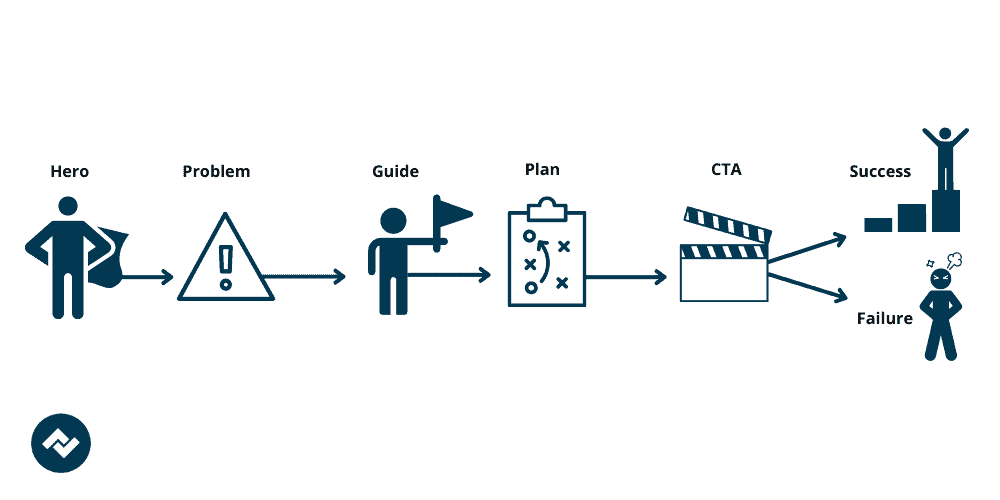
Action Step: Use the StoryBrand framework (we are big fans of it around here) to explain your value in plain, client-centered language. Rather than opening with how long you have been in business or listing every service you offer, name the problem your ideal client is carrying and describe how you help them work through it.
Example:
Instead of: “We’re a full-service financial firm with 20 years of experience.”
Try: “We help successful professionals stop worrying about money and start building a future they can enjoy.”
Key takeaway: A clear message earns trust faster than a long list of credentials.
Want to see how this works in practice? Here are several StoryBrand BrandScript examples, plus a walkthrough on how to create a clear brand message.
Goal #2: Increase Visibility Through Thought Leadership
Why it matters: Advisors earn trust by showing their thinking. But no one can trust an advisor they have never heard of.
Action Step: Build a content plan around SEO-focused articles, LinkedIn writing, and the occasional speaking engagement. Choose topics the people you serve are already searching for: retirement readiness, tax-smart investing, or navigating a sudden change in wealth.
A note on process:Build compliance review into your content calendar from the start rather than treating it as the last step before publishing. Advisors who plan for a review window publish consistently. Advisors who do not tend to stall out after a few months.
Pro Tip: Google Keyword Planner is free, and it will show you what your audience actually types. Phrases like “retirement planning checklist” or “how to save taxes as a business owner” tell you where the real interest is.
Reuse what you write:
- Article → LinkedIn post
- LinkedIn post → email newsletter
- Webinar highlights → short video clips
Key takeaway: When your name keeps appearing alongside useful, relevant thinking, trust starts forming well before a first conversation.
More on this: our guide to content strategy for financial advisors covers how to structure this inside an RIA.
Goal #3: Define Your Ideal Client Profile
Why it matters: Marketing written for everyone reaches no one. The clients you most want to serve should read your website and feel like you already understand their situation.
Action Step: Write out a clear client profile:
- What do they do for a living?
- What life stage are they in?
- What financial questions or concerns keep them up at night?
For example, instead of “We help people plan for retirement,” try “We help dentists nearing retirement structure their exit and protect what they have built.”
The more specific you get, the more your marketing does the work of qualifying who reaches out.
Key takeaway: Speak to someone, not everyone.
Want help narrowing this down? Here is the one mistake we see firms make most often when defining their audience.
Goal #4: Build a Website That Earns Inquiries
Why it matters: Your website is often the first real impression a prospective client forms of your firm. It should carry its weight, not sit there as a digital brochure.
Action Step: Make sure your website includes:
✅ A clear headline that explains who you serve and how
✅ One simple next step, such as “Schedule an introductory call”
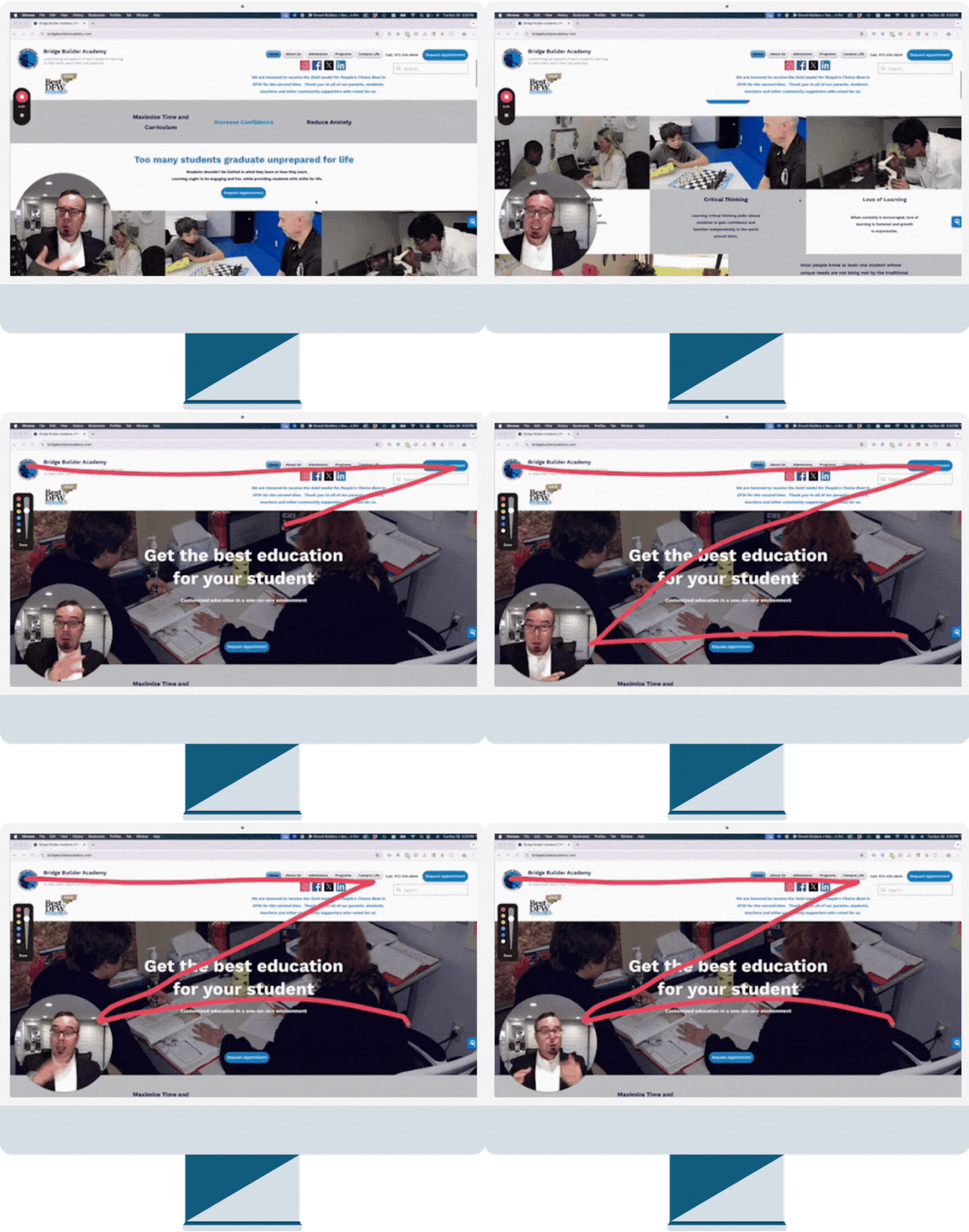
✅ Credibility markers your compliance team is comfortable with, such as team bios, credentials, your planning process laid out plainly, and links to your firm’s disclosures
✅ A useful resource visitors can download, like a checklist, guide, or planning worksheet
Pro Tip: Tools like Hotjar or Google Analytics show you how visitors move through your site. If people leave the homepage quickly, your message probably is not landing.
Key takeaway: A website that looks good is a starting point. A website that answers the right questions is what earns the call.
A note on credibility:Client testimonials and reviews are permitted under the SEC Marketing Rule, but they carry disclosure and oversight requirements, and many firms decide the administrative weight is not worth it. If yours is one of them, you can still establish credibility. Being transparent about your process, your credentials, your fee structure, and who you serve does that work well, and it does it without a compliance headache.
Building or rebuilding your site this year? Start with our 10 must-haves for a financial advisor website.

Goal #5: Build an Email Nurture System
Why it matters: Most people will not reach out to a financial advisor on their first visit to your site. Many of them will share an email address if you offer something genuinely useful in return.
Action Step: Create an automated email series that educates and builds familiarity over time. Start with a helpful resource, something like “5 Mistakes Professionals Make When Planning for Retirement,” and follow it with a sequence along these lines:
- Welcome email
- A short, anonymized look at how you approached a common planning challenge
- Education on your core service
- An invitation to schedule an introductory call
Tools like Mailchimp, ActiveCampaign, or HubSpot make this straightforward to set up. Route the full sequence through compliance once, at the start. Because these emails are evergreen, one review covers you for the life of the series.
Key takeaway: Showing up consistently with something worth reading keeps you in mind long before anyone is ready to talk.
More on this: how to write emails people actually want to read.
Goal #6: Use Social Media Strategically
Why it matters: Social media is not only for younger audiences. LinkedIn and Facebook remain useful for advisors who approach them with intent.
Action Step:
- Focus on educating rather than promoting
- Share anonymized examples of planning work, reviewed by compliance first
- Use short video to let people see who you are before they meet you
- Reply to comments and messages, since that is where relationships tend to start
Steady beats sporadic. Pick one platform and post weekly. Reach matters far less than being visible to the right hundred people, and going viral is not the goal. Most firms also need an archiving solution for social activity. Get that in place before you start posting rather than after.
Key takeaway: Conversations in the comments often turn into conversations in your calendar.
Want a fuller playbook? Here is how social media builds your brand over time.
Goal #7: Track and Improve Key Metrics
Why it matters: Marketing without measurement is guessing. You need to see what is working, and what is not, to know where to put your time next quarter.
Action Step: Set up a simple dashboard or a monthly review covering:
- Website traffic
- Email open and click-through rates
- Social engagement
- Qualified inquiries each month
- Introductory calls scheduled
- New client relationships started
Free and low-cost tools that help:
- Google Analytics
- HubSpot CRM
- Semrush or Ahrefs for SEO tracking
Key takeaway: What gets measured gets improved.
Curious which numbers matter most? Here are the 5 marketing metrics we track for our clients.

Goal #8: Build a System for Earning Introductions
Why it matters: Introductions from existing clients and professional partners remain the single strongest source of new relationships for most advisory firms. Very few firms have any real system behind them, which means most introductions happen by accident.
Action Step:
- Ask clients what they value about working with you, in your annual review conversations. You will learn how to describe your own work, and you will hear who else in their life might need it.
- Build relationships with centers of influence, including CPAs, estate attorneys, and business brokers who serve the same people you do
- Make introductions easy to act on, with a short email your client can forward or a page you can point someone toward
- Acknowledge introductions thoughtfully, within your firm’s gift and compensation policies
A note on compliance: If your compliance team does permit testimonials or client reviews under the SEC Marketing Rule, they can be valuable. Talk to your CCO about disclosure requirements and record-keeping before you collect anything. If testimonials are off the table, introductions and center-of-influence relationships will carry more weight anyway, because they arrive with trust already attached.
Key takeaway: Introductions happen far more often when you make it clear you welcome them.
Ready to build this out? Here is our full guide to referral marketing for financial advisors.
Goal #9: Let People See Who You Are
Why it matters: Clients choose an advisor, not a firm. They are handing over something personal, and they want to know who is on the other side of the table.
Action Step: Let your marketing reflect what you care about, not only what you do. Share the work behind the scenes, introduce your team, and talk about what your firm is part of in your community. Write the way you talk. Leave the industry jargon out.
Clients want to know:
- Who are you?
- What do you stand for?
- Why should I trust you with this?
Key takeaway: The advisor who feels like a real person is the one people call.
More on this: how financial advisors build trust online.

Goal #10: Align Your Marketing with How Relationships Actually Form
Why it matters: Marketing is not only about generating more inquiries. It is about helping the right people find you and feel ready to start a conversation.
Action Step:
- Match each call to action to the next real step: an introductory call, then a discovery conversation, then a planning engagement
- Say plainly who you serve, so the wrong-fit inquiries filter themselves out before they reach your calendar
- Give your team the materials they need to guide someone from first curiosity to a signed agreement
At Hughes Integrated, we call this the Blueprint Process. It helps advisors clarify their message, map their strategy, and put a plan in motion to grow the firm. Your marketing should be clearing that path, not adding steps to it.
Key takeaway: Good marketing means fewer explanations later.
Here is more on mapping the client journey so your process works with you.
Common Questions About Marketing for Financial Advisors
How do I market myself as a financial advisor without sounding like a salesperson?
Lead with your thinking rather than your services. Write about the questions your clients actually bring you, publish it consistently, and let people arrive already trusting how you approach their situation. The advisors who grow steadily are usually the ones teaching, not pitching.
How do financial advisors handle compliance and still market effectively?
Plan for it instead of reacting to it. Build a review window into your content calendar, submit evergreen material such as email sequences and website copy once rather than piece by piece, and get your archiving solution in place before you start publishing. Compliance slows firms down mostly when it comes as an afterthought.
How much should a financial advisor spend on marketing?
Most advisory firms invest somewhere between 2 and 5 percent of revenue, with growth-focused firms running higher. The more useful question is whether your spending maps to the goals above, because a large budget spread across scattered tactics tends to underperform a modest one behind a clear plan.
How long before advisor marketing shows results?
Email and referral systems can show movement within a quarter. SEO and thought leadership generally take six to twelve months to compound. Plan for both, so you have something working now and something building for later.
Final Thoughts
Marketing for financial advisors is not about chasing trends or copying the firm down the street. It is about setting goals that match the way you actually build trust with people.
Clarify your message, focus your effort, and pay attention to the numbers that matter. Do that consistently and your marketing starts compounding instead of draining.
Want a second set of eyes on your plan? That is what we do at Hughes Integrated. From messaging strategy to full execution, we help advisory firms turn marketing into steady, measurable growth.
Working through your plan for the year? Our year-end marketing checklist for financial advisors pairs well with this one.