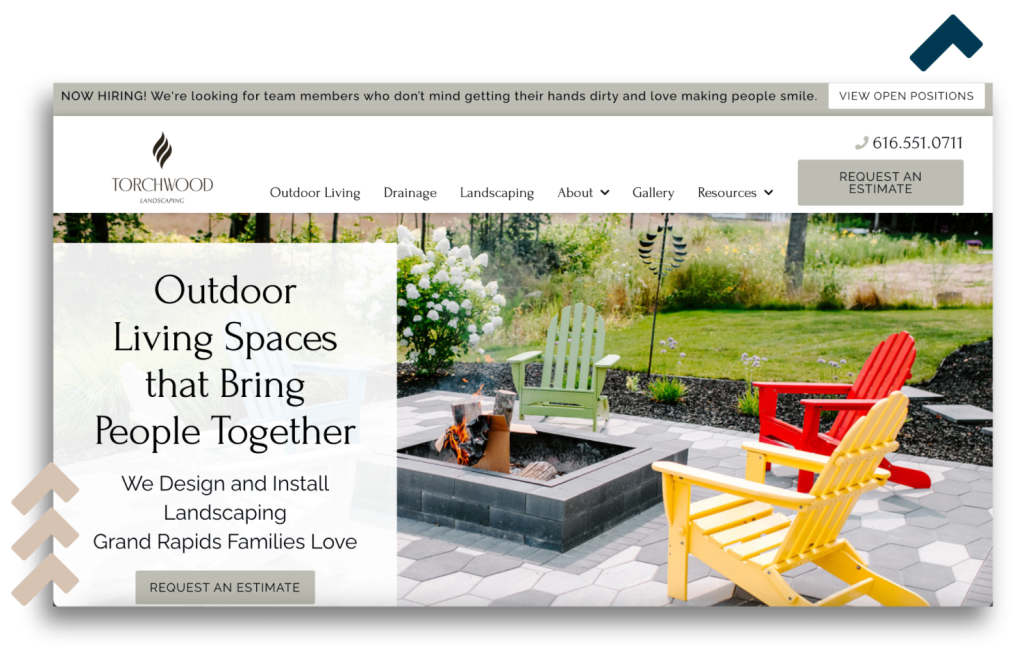
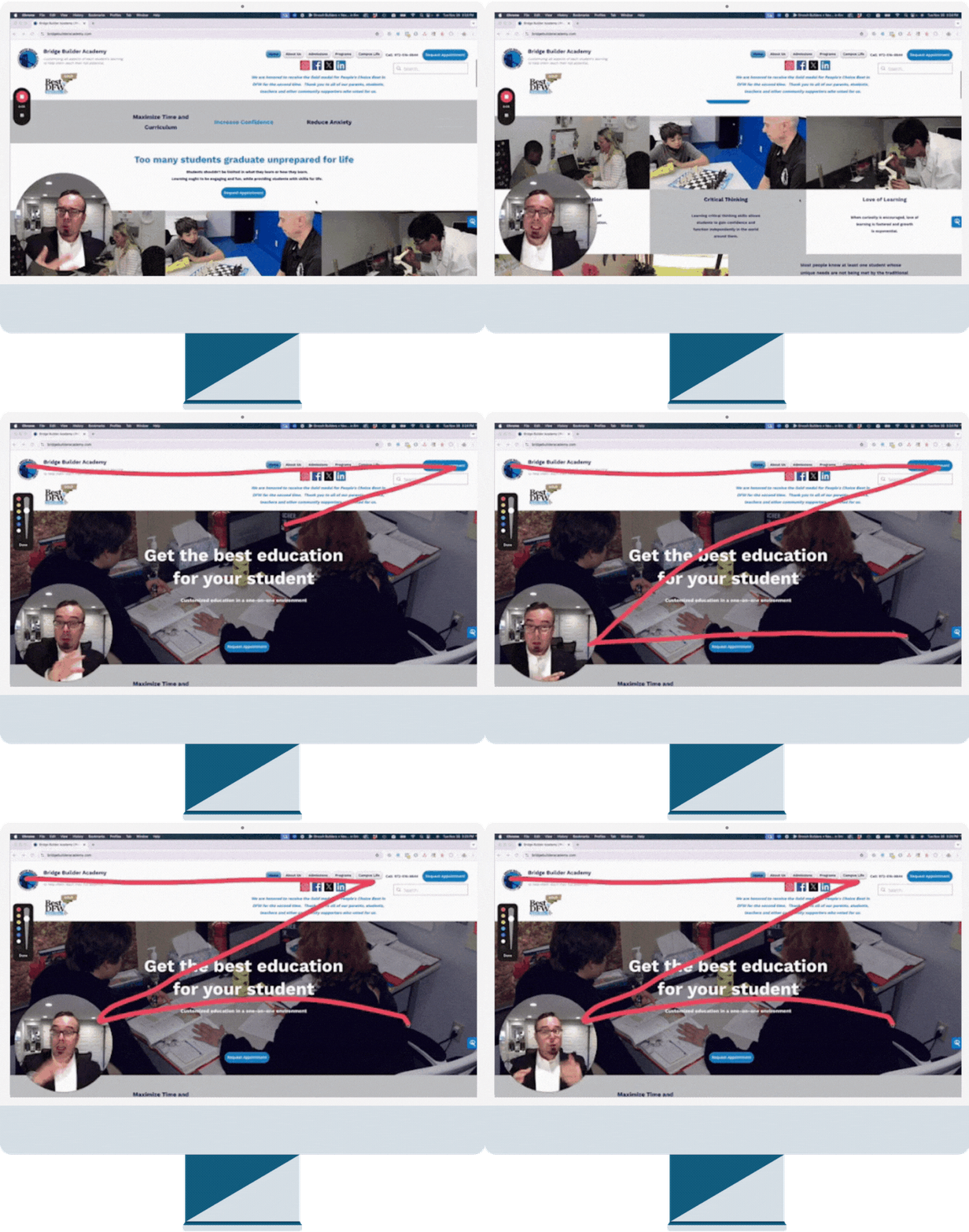
You may be a master at building commercial and residential properties, but how confident are you in creating an effective digital marketing strategy for your construction business?
If you’re not as self-assured as you’d like to be, that’s okay—this guide to digital marketing for builders is designed to serve as both a toolbox and a blueprint.
Hughes Integrated digital marketing agency has developed complete, coordinated marketing campaigns and sales funnels for construction companies just like yours. In this article, we’ll share the best of what we’ve learned over the years.
Along the way, we’ll unveil the challenges unique to marketing in the construction industry, outline the steps to a clear strategy, and offer recommendations for content that has proven to perform well in the real world. It’s everything you need to transform your marketing from a work-in-progress into a cornerstone of your business growth.
1. Understand the Unique Marketing Challenges for Builders
 In our experience creating digital marketing strategies for builders, we’ve found that business owners have heard more than their fair share of marketing advice. A simple Google search reveals plenty of tips and tricks, but these strategies often conflict and rarely address the unique challenges specific to your industry. What works for e-commerce or lifestyle influencers does not always work for builders.
Competition from Bigger Companies:
Whether you’re building homes or office spaces, you’re not the only construction business in town. One of your biggest hurdles is competing with larger companies that have bigger marketing budgets, broader service areas, and higher brand recognition. When someone wants to inquire about a project, they’ll often think of the big brands first.
Without a solid strategy, these large firms may dominate the market, leaving mid-sized and smaller companies scrambling to compete. This can lead to underbidding or accepting less profitable work.
High Price Points:
Regardless of where you bid your services, builders face the reality that their services are often one of the most expensive investments a client will make in a given year or decade. This means that the customer journey looks vastly different for products and services at lower price points.
Consumers easily make quick decisions about dinner or a new pair of shoes. But when it comes to a $300,000 home or a multi-million dollar office space, clients rightly slow down. They deliberate for months or even years, request multiple quotes, consider various options, and negotiate changes up until the project is completed.
While careful decision-making is warranted, this lengthy journey makes landing a deal much more challenging for builders than other industries. It requires significant time and effort to acquire one client, and there’s ample opportunity to lose them during the process.
Project Complexity:
Along with a higher price point, construction projects are far more complex than the typical product or service. There are many more options and numerous moving pieces, as well as shifting timelines and extensive teams. This is surely needed for projects at this scale, but try to explain it to one of your clients, and chances are you’ll overwhelm them immediately.
Homebuyers and business owners may have a vision for what they want, but it often falls to the builder to explain everything in a way that lands deals instead of scaring them away. You have a lot of information that needs to be communicated and it all needs to be shared in such a way that you both land the right jobs and work through a project as smoothly as possible.
2. Develop a Clear Marketing Strategy
The above challenges are difficult, but they are surmountable with the right digital marketing strategy for builders. Here are the first steps we would recommend:
Define Your Ideal Audience:
To resonate with your audience and attract the right clients, start by defining who they are. Develop detailed client personas that capture the demographics, needs, and desires of your target market. Are they homeowners looking for renovations, or commercial clients requiring new office buildings? What challenges do they face, and what are their priorities?
Creating personas helps you tailor messaging that speaks directly to their concerns and goals. If, for instance, your ideal clients are homeowners in their 40s seeking kitchen remodels, your messaging can focus on the benefits of modern design and improved functionality. Understanding your audience allows you to position your services in a way that aligns with their specific needs and guides your overall marketing strategy.
Clarify Your Value Proposition:
To stand out in a crowded marketplace, you need a clear value proposition. Identify what differentiates your firm and craft messages that highlight your specialized expertise, previous project success, or unique approach. Are you known for:
- timely project delivery?
- superior customer service?
- or working seamlessly on complex commercial projects?
Your value proposition should emphasize how your services solve specific client problems. For example, if you’re a leader in sustainable building practices, highlight how your environmentally friendly designs help clients reduce their carbon footprint while maintaining a high level of quality. A compelling value proposition makes your firm memorable and persuades prospects that you’re the best choice for their project.
Optimize Your Website for Lead Generation:
As a builder or general contractor, your website has a unique role compared to other industries. While online retail sites are focused on immediate purchases, your website should prioritize capturing leads. This means recognizing that most visitors won’t commit to your services after just one visit but might be interested enough to explore further.
Your website’s primary goal is to encourage that next step by offering valuable content and clear calls to action (CTAs) that entice visitors to share their contact information, opening the door for relationship-building. Use your website to establish credibility, showcase expertise, and create connections with potential clients. Examples of valuable content include:
- Project Portfolios: Showcase completed work to highlight your technical proficiency and creativity.
- Guides and Checklists: Provide helpful resources for clients to plan projects efficiently, understand building regulations, or determine budget ranges.
- Video Tutorials or Webinars: Share educational content that explains construction processes and how your team can deliver successful outcomes.
These resources demonstrate your company’s expertise and allow you to gain insights into your visitors’ interests and concerns. For example, a downloadable construction planning guide can attract clients seeking to streamline their projects.
Every CTA and piece of content should be crafted with your target audience’s needs in mind, guiding them to engage further, whether through a quote request, resource download, or project inquiry. Your website can become a powerful tool for generating and nurturing leads if optimized correctly.
3. Building Success: Strategic Digital Marketing Solutions for Builders
 If you want your general contractor or builder digital marketing to stand out here are the strategies we suggest you focus on:
Prioritize Local SEO and Optimize Google Business Profile
Local SEO and an optimized Google Business Profile can be game changers for builders who want to stand out in their area. Many prospective clients search for builders based on proximity and relevant services, making it important that your firm appears prominently in local search results.
Start by ensuring your website includes location-specific keywords and clear contact information. Create separate landing pages optimized for each region or city where you operate, so you’re reaching potential clients seeking your services in their vicinity. For your Google Business Profile, fill out all details comprehensively, including service areas, business hours, and recent photos. Encourage satisfied clients to leave reviews, as a strong rating will increase your credibility and improve your ranking.
Build Brand Awareness
To compete with larger companies and increase your visibility, focus on building brand awareness. While simple tactics like displaying your company name on active projects can be effective, digital marketing allows you to reach a broader audience. Google ads are particularly valuable here—target relevant keywords that reflect the services you provide and even consider placing ads that appear alongside searches for your competitors. This will help your brand appear in front of a larger audience, especially those actively seeking construction services.
Additionally, utilize social media platforms and local publications to increase brand visibility. Share stories about your team’s community involvement or behind-the-scenes glimpses of your projects to humanize your brand and create a memorable impression.
Build Out Project Portfolios
A compelling project portfolio can be a powerful marketing tool. People naturally gravitate toward visual content that showcases a builder’s capabilities. Create original content, like before-and-after shots or timelapse videos of projects from start to finish. Showcase these on project-specific pages that feature detailed descriptions of the challenges solved, the client’s satisfaction, and relevant search terms.
These pages will help potential clients visualize how you can meet their needs while also improving your search engine ranking. Highlight specific keywords to ensure your portfolio ranks higher on Google, helping you attract new leads who are searching for quality work.
Create a Proven Process Page and Resource
Since your building process can be complex and intimidating, simplify it by creating a proven process page. Develop a webpage with a clear, simple graphic that outlines the key steps of your building process. Use minimal yet clear language to describe each stage so that potential clients understand what it’s like to work with you.
This page should be accessible on your website but also have a downloadable PDF version to share with prospective clients who inquire about your services. A clear and concise process explanation can reassure clients and distinguish you from competitors, helping them see why working with you is a worthwhile investment.
Automate Nurture Campaigns
Given the longer client journey in construction, nurturing leads over an extended period is crucial. Automated nurture campaigns can help you maintain consistent contact with prospects while adding value at each touchpoint.
Provide them with free resources like construction planning guides, offer helpful insights through curated blog posts or articles, or simply check in with friendly emails to remind them of your presence. By delivering valuable and personalized content, you’ll stay top-of-mind and position yourself as a trusted partner whenever they’re ready to move forward.
Streamline Communication
Maintaining clear communication is vital to earning and keeping clients’ trust. Use marketing automation tools to streamline communication and reassure clients that their needs are being addressed.
Simple automated responses acknowledging message receipt or outlining next steps can significantly improve their experience. Regular status updates will help clients feel cared for and aware of what’s happening at each project stage. Additionally, if you can encourage clients to prepare their materials or take required actions on their end, you’ll be able to expedite the building process with fewer delays.
4. Creating a Cohesive Strategy: Driving the Client Relationship Forward
For builders, the effectiveness of digital marketing relies not just on individual tactics, but on creating a cohesive strategy that moves prospects through the client journey—from initial awareness to final decision-making. A disjointed approach can confuse potential clients or leave them uncertain about your services, while a coordinated strategy ensures every marketing effort contributes towards building stronger relationships and guiding clients to a clear action.
Integrating Various Channels
To create a seamless experience for your clients, your marketing efforts should be synchronized across all platforms and channels. This means aligning your messaging on your website, social media, email campaigns, and digital ads to present a unified theme and consistent value proposition. For example, if you’re promoting a specific type of construction service on social media, this should be reflected in your Google Ads, and supported by in-depth content on your website, such as blog posts or a dedicated service page.
Streamlining the Client Journey
A cohesive strategy not only includes consistent messaging across channels but also ensures that each piece of content and each interaction is designed to advance the client along their journey. Start by mapping out the typical path your clients take, from the moment they become aware of your brand to when they sign a contract. At each stage, identify the key touchpoints—such as an informative blog post, a follow-up email, or a targeted ad—and ensure that each one builds on the last to deepen the client’s engagement and commitment.
Leveraging Automation and Personalization
Use marketing automation tools to deliver the right message at the right time. For instance, automated email workflows can be triggered by specific actions a prospect takes, such as downloading a guide from your website. Each email in the series should provide additional value, addressing potential questions or concerns that arise as the prospect moves closer to a purchasing decision. Personalization enhances this process by tailoring the messaging to the specific needs and interests of each prospect, based on their interactions with your brand.
Measuring and Adjusting
To ensure your strategy remains effective, continuously measure the impact of different tactics and touchpoints. Use analytics to track how prospects interact with your content and move through the sales funnel. Regularly reviewing this data allows you to refine your approach, adjust strategies that aren’t performing, and optimize those that are driving results. This ongoing adjustment is key to maintaining a dynamic strategy that adapts to changes in client behavior and market conditions.
By integrating these elements into a unified digital marketing strategy, builders can more effectively guide prospects through the buying process, ensuring that every marketing effort contributes positively to the end goal of securing a client. This approach not only improves efficiency and ROI but also enhances the client experience, setting your firm apart as a trusted and professional choice in the construction industry.
Partner with Hughes Integrated to Build Your Digital Marketing Blueprint
In an industry where projects are complex, price points are high, and competition is fierce, having an effective digital marketing strategy is essential for construction businesses to stand out and attract ideal clients. By understanding the unique challenges builders face and developing a clear plan focused on local SEO, brand awareness, visuals, automation, and seamless communication—and tying all these elements together into a cohesive, client-focused experience—construction firms can cut through the noise and build lasting relationships with the right customers.
Digital marketing may seem like uncharted territory for many builders, but approaching it strategically is key to guiding prospects successfully through the lengthy buyer’s journey. From defining your value proposition to nurturing leads with the right content to streamlining communication every step of the way, an integrated digital strategy allows you to position your expertise effectively, earn trust, and secure those hard-won projects. With the right blueprint, your marketing efforts can become as robust and high-quality as the buildings you construct.
At Hughes Integrated, we’ve helped construction firms like yours implement these strategies to build strong, long-term client relationships. Our relationship-first approach ensures your messaging resonates with your audience, guiding them through the customer journey and ultimately helping your business thrive. Ready to grow your business? Schedule a consultation with us today and discover how we can craft a tailored digital marketing strategy that aligns with your goals.